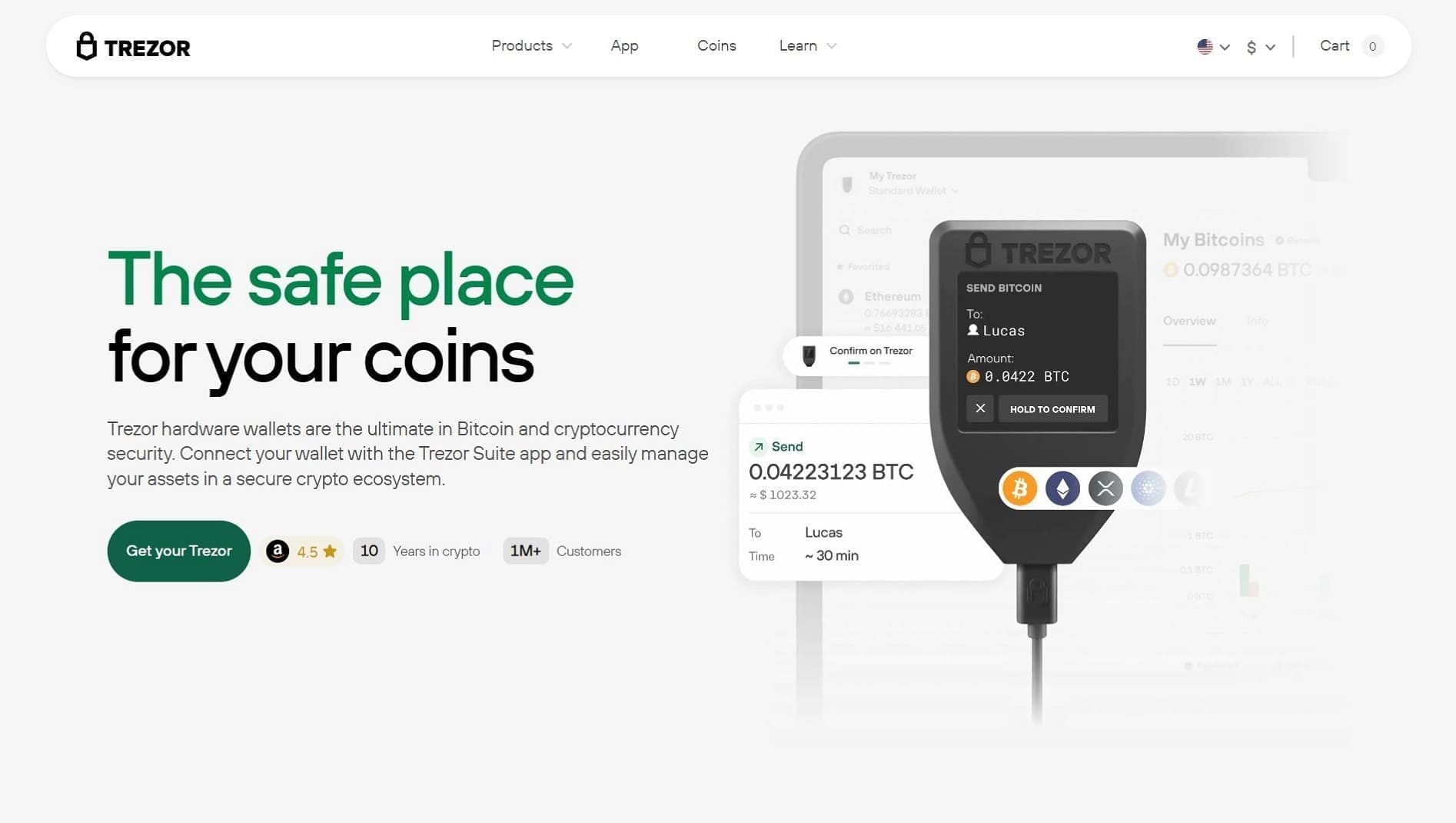
What Is Trezor Bridge?
Trezor Bridge is a lightweight background application (also known as a daemon or communication tool) that facilitates encrypted data exchange between your Trezor device (such as Trezor Model T, Trezor One, or newer models) and software interfaces like Trezor Suite or compatible third-party wallets.
Unlike direct USB communication that browsers cannot reliably handle due to security restrictions, Bridge runs locally on your machine as a service. It listens for requests from applications, relays them to the hardware wallet for confirmation (e.g., signing transactions), and returns responses—all while keeping your private keys isolated on the device itself.
Originally released around 2018 as an improved replacement for earlier connection methods, Bridge was designed to provide a stable, cross-platform way to interact with Trezor devices via web browsers or desktop apps. It operates on ports (typically localhost) and uses a well-defined API to ensure only authorized software can communicate with the device.
In modern setups, many users encounter Bridge when using the web version of Trezor Suite or integrating with external wallets like Exodus. It runs silently in the background, starting automatically when needed, and requires no manual intervention during normal use.
Why You Might Need Trezor Bridge
Hardware wallets prioritize security by keeping private keys offline. However, to perform actions like viewing balances, sending cryptocurrency, or signing messages, the device must communicate with external software. Browsers impose strict sandboxing rules that prevent direct USB access to hardware, so a local bridge becomes essential.
Without Bridge (or an equivalent), you might see errors such as "Device not found" or prompts to install additional software when accessing Trezor Suite in a browser or connecting to supported dApps/wallets. It is particularly useful for:
Web-based Trezor Suite usage
Third-party integrations requiring device signing
Older setups before full bundling in newer apps
Bridge ensures end-to-end encryption during transit and verifies device authenticity, reducing risks from malicious software pretending to be legitimate tools.
How Trezor Bridge Works
The process is straightforward yet robust:
Installation and Startup — Once installed, Bridge launches as a background process (trezord-go on many systems).
Device Detection — When you plug in your Trezor via USB, Bridge detects it and establishes a secure channel.
Application Requests — Trezor Suite, a web app, or another compatible program sends API calls (e.g., "get public key" or "sign transaction").
User Confirmation — Bridge forwards the request to the Trezor device. You physically confirm actions on the hardware screen (e.g., entering PIN or approving a transaction).
Response Delivery — Signed data returns securely through Bridge to the requesting application, which then broadcasts it to the blockchain.
This architecture maintains the "cold storage" principle: private keys never leave the device, and sensitive operations require physical confirmation.
Installation Guide for Trezor Bridge
Although standalone Bridge is being phased out in favor of integrated solutions, installation remains simple when required. Always download from official sources to avoid phishing or malware.
Visit the official Trezor website (trezor.io) and navigate to the start/setup section or support guides.
Look for the Bridge download link (often prompted automatically if your setup detects it's missing).
Select the version matching your operating system:
Windows (.exe installer)
macOS (.pkg or .dmg)
Linux (various packages like .deb, .rpm, or via Homebrew/AppImage)
Run the installer and follow on-screen instructions (may require admin privileges).
Restart your browser or computer if prompted.
Connect your Trezor device — Bridge should auto-detect it.
For Linux users, tools like Homebrew (brew install trezor-bridge) or manual daemon setup may apply in advanced cases.
After installation, Bridge appears in system processes (e.g., as trezord) and requires no further configuration for standard use.
Current Status and Deprecation of Standalone Trezor Bridge
Important update: As of recent years (with announcements continuing into 2025), standalone Trezor Bridge is deprecated and being removed from active support. Trezor has shifted toward bundling communication functionality directly into Trezor Suite (the official desktop and web app).
Modern Trezor Suite desktop versions include built-in Bridge-like capabilities, eliminating the need for separate installation in most cases.
The web version of Trezor Suite may still prompt for Bridge in certain browsers or legacy setups.
Trezor recommends uninstalling old standalone Bridge versions to avoid conflicts and using the latest Trezor Suite instead.
Continued use of deprecated Bridge may require outdated Suite versions, increasing security risks over time.
If you're setting up a new device in 2026, start at trezor.io/start — the process guides you to download Trezor Suite directly, which handles connections seamlessly in most scenarios.
Benefits of Using Bridge (or Its Integrated Equivalent)
Enhanced Security — Local encrypted communication prevents browser-based attacks.
Cross-Platform Compatibility — Works across Windows, macOS, and Linux.
Seamless Integration — Enables features like firmware updates, transaction signing, and balance checks.
Lightweight — Minimal resource usage (runs only when needed).
Open-Source Roots — Based on trezord-go (GitHub repository), allowing community verification.
Common Issues and Troubleshooting
Bridge not detecting device → Ensure USB cable/port works, restart Bridge/service, or reinstall.
Prompts to install repeatedly → Update to latest Trezor Suite (bundled solution).
Compatibility errors → Check OS/browser versions; use desktop Suite for stability.
Security concerns → Always verify downloads from trezor.io; check PGP signatures if available.
Conclusion
Trezor Bridge played a foundational role in making hardware wallets accessible via browsers and apps, bridging the gap between offline security and online functionality. While the standalone version is now deprecated in favor of more integrated tools like Trezor Suite, understanding its purpose helps appreciate the evolution of crypto self-custody.
For the best experience today, download and use the latest Trezor Suite from the official site. It provides everything Bridge once did—plus modern features like built-in exchange, portfolio tracking, and enhanced privacy—while maintaining Trezor's uncompromising security standards.